brother p touch instructions

Brother P-Touch Instructions: A Comprehensive Guide

Brother P-touch label makers offer versatile solutions for organization‚ utilizing genuine Brother TZ tapes and accessible software for efficient label creation.

Explore detailed guides‚ PDF manuals‚ and recycling programs for optimal printer performance and sustainable practices with Brother products.

This comprehensive resource covers setup‚ troubleshooting‚ and advanced features‚ ensuring seamless labeling for home or office applications;

Brother P-touch label makers have become synonymous with efficient organization and professional labeling solutions. These devices cater to a diverse range of needs‚ from simple home projects to complex industrial applications. Brother’s commitment to innovation is evident in their wide array of models‚ each designed with user-friendliness in mind.

The core functionality revolves around creating customized‚ durable labels using specialized Brother TZ tape. These labelers empower users to streamline tasks‚ enhance clarity‚ and maintain a polished appearance in various settings. Accessing user guides and PDF manuals is crucial for maximizing the potential of your P-touch device.

Understanding P-Touch Models

Brother P-touch models vary significantly in features and capabilities. Basic models‚ like the PT2700‚ offer straightforward functionality for simple labeling tasks. More advanced options‚ such as the PT-D460BT‚ include features like Bluetooth connectivity and expanded font choices. The P-Touch One series introduces mobile app integration for on-the-go label creation.

Understanding these distinctions is key to selecting the right model for your needs. Consider factors like label volume‚ desired features‚ and connectivity requirements. Referencing official Brother resources and comparing specifications will ensure you choose a P-touch that aligns with your labeling goals.

PT-D460BT: A Popular Model Overview

The Brother PT-D460BT is a highly-rated desktop label printer known for its versatility. It features a full-color display‚ automatic tape cutter‚ and a QWERTY keyboard for easy text input. Bluetooth connectivity allows wireless printing from smartphones and tablets using the Brother iPrint&Label app.

This model supports a wide range of Brother TZ tape sizes and colors‚ offering flexibility for diverse labeling applications. The PT-D460BT is ideal for both home and office use‚ providing professional-quality labels with user-friendly operation. Download the PDF user manual for detailed instructions.

Getting Started with Your P-Touch

Brother P-touch labelers are designed for easy operation; begin by unpacking‚ powering on‚ and familiarizing yourself with the basic functions for quick setup.

Unboxing and Initial Setup

Carefully unpack your Brother P-touch label maker‚ ensuring all components are present – the unit itself‚ a starter tape cassette‚ and the AC adapter. Verify the power cord is securely connected to both the printer and a functioning electrical outlet.

Before initial use‚ remove any protective films or packaging materials from the device. Consult the included user guide for a visual inventory of parts and a quick-start setup diagram. Ensure the tape cassette is correctly loaded‚ following the instructions detailed in the manual.

Proper initial setup is crucial for optimal performance and longevity of your Brother P-touch labeler.

Powering On and Basic Functions

To power on your Brother P-touch‚ press the power button‚ typically located on the side or top of the unit. The display screen will illuminate‚ indicating the device is ready. Familiarize yourself with the basic navigation buttons – often including ‘Start/Stop’‚ ‘Print’‚ and directional arrows.

Experiment with simple text entry to understand the keyboard layout. Use the ‘Preview’ function to visualize your label before printing. The ‘Clear’ button allows for quick text correction.

Mastering these fundamental functions is key to efficient label creation with your Brother device.

Installing and Connecting to a Computer (if applicable)

For models like the PT-D460BT‚ download the latest P-touch Editor software from the official Brother support website. Install the software following the on-screen prompts. Connect your P-touch to your computer using a USB cable.

The computer should automatically detect the device and install necessary drivers. If not‚ manually install drivers downloaded from Brother’s website. Ensure a stable connection for seamless label design and printing directly from your computer.

Refer to the user manual for specific connection instructions.

Creating Your First Label

P-touch labelers simplify label creation with intuitive displays‚ allowing easy text entry‚ font selection‚ and size adjustments for professional results.

Design custom labels quickly and efficiently!

Navigating the P-Touch Display

The P-touch display serves as your central control panel for label creation. Familiarize yourself with the buttons for text input‚ font styles‚ and size selection.

Use the navigation keys to scroll through menus and options‚ previewing your label design in real-time.

The display often includes a preview window‚ allowing you to visualize the final output before printing.

Explore the function keys for accessing symbols‚ frames‚ and advanced features.

Refer to your specific model’s user guide for detailed explanations of each button and menu option‚ ensuring a smooth and efficient labeling experience.

Entering Text and Numbers

To enter text on your P-touch‚ utilize the on-screen keyboard or connect to a computer via P-touch Editor software.

Cycle through letter cases (uppercase‚ lowercase) using the shift key‚ and input numbers directly from the numeric keypad.

Many models support multiple languages; select your desired input method from the settings menu.

Correct errors using the backspace or delete key‚ ensuring accurate label content.

Experiment with different font sizes and styles to achieve the desired readability and aesthetic appeal for your labels.

Selecting Fonts and Styles

Brother P-touch label makers offer a variety of fonts and styles to personalize your labels. Navigate the display menu to browse available font options‚ ranging from standard to decorative styles.

Adjust font size to fit your label width and ensure readability. Explore style options like bold‚ italic‚ underline‚ and outline to emphasize text.

Some models allow font color selection‚ enhancing visual appeal. Preview your choices before printing to confirm the desired look.

Experiment with combinations to create unique and professional-looking labels.

Choosing Label Size and Type

Brother P-touch label makers support diverse label sizes and types‚ catering to various needs. Select the appropriate width based on the amount of text and desired appearance.

Brother TZ tapes are available in different materials‚ including laminated and non-laminated options‚ offering durability and resistance to environmental factors.

Choose tape colors to categorize or highlight information effectively.

Ensure compatibility between the label maker model and the selected tape cassette for optimal printing performance and avoid jams.

Advanced Labeling Features

Brother P-touch offers features like symbols‚ frames‚ and barcodes for customized labels. Create templates and print multiple copies efficiently for diverse labeling tasks.

Using Symbols and Frames

Brother P-touch label makers enhance label aesthetics with built-in symbols and decorative frames. Access a diverse library directly on the device or through the P-touch Editor software on your computer.

These elements add visual appeal and clarity to labels‚ ideal for organizing files‚ identifying cables‚ or creating eye-catching product labels. Experiment with different combinations to personalize your labels.

The software allows for precise placement and resizing of symbols and frames‚ ensuring professional-looking results. Utilize these features to create labels that are both informative and visually engaging.

Adding Barcodes

Brother P-touch label makers‚ particularly when connected to a computer via P-touch Editor software‚ facilitate barcode creation and printing. This feature is invaluable for inventory management‚ asset tracking‚ and retail applications.

The software supports various barcode symbologies‚ including Code 39‚ Code 128‚ and EAN‚ allowing compatibility with diverse scanning systems. Input data directly or import from spreadsheets for efficient barcode generation.

Ensure accurate barcode scanning by verifying the selected symbology and data integrity. Properly printed barcodes streamline processes and enhance data accuracy.

Creating Templates

Brother P-touch Editor software empowers users to design custom label templates for consistent and efficient labeling. Templates store formatting‚ fonts‚ and frequently used text‚ saving time and ensuring uniformity across multiple labels.

Users can create templates from scratch or modify existing ones‚ incorporating logos‚ frames‚ and barcodes. Save templates for repeated use‚ streamlining workflows for common labeling tasks.

Templates are particularly useful for creating standardized labels for file folders‚ asset tags‚ or product identification‚ enhancing organization and professionalism.

Printing Multiple Copies

Brother P-touch label makers simplify producing multiple identical labels efficiently. After designing a label‚ users can easily specify the desired number of copies directly on the device or within the P-touch Editor software.

This feature is ideal for applications requiring numerous labels‚ such as pricing‚ inventory management‚ or addressing envelopes. The printer automatically handles the repetition‚ saving time and effort.

Ensure sufficient tape length is loaded for the requested quantity to avoid interruptions during the printing process‚ maintaining a smooth workflow.

Tape Management and Compatibility

Brother TZ tape options provide durability and clarity; proper loading and replacement prevent jams. Use only Brother tapes for optimal performance.

Genuine tapes ensure compatibility and quality‚ extending the life of your P-touch label maker.

Brother TZ Tape Options

Brother offers a diverse range of TZ tape options designed to meet various labeling needs. These laminated tapes provide excellent resistance to water‚ chemicals‚ abrasion‚ and fading‚ ensuring long-lasting‚ professional-quality labels.

Available in numerous colors‚ widths‚ and finishes – including standard‚ matte‚ and high-gloss – TZ tapes cater to diverse applications. Specialized tapes include extra-strong adhesive for textured surfaces and flexible ID tapes for curved surfaces.

Using only genuine Brother TZ tapes guarantees optimal printer performance and prevents potential damage to the printhead. Compatibility is crucial for reliable and consistent results.

Loading and Replacing Tape Cassettes

Loading a new Brother TZ tape cassette is straightforward. Open the tape compartment cover‚ and insert the cassette with the label side facing up. Ensure it clicks securely into place. To replace a cassette‚ gently lift the lever to release the old one before inserting the new.

Always handle cassettes with care to avoid damaging the internal mechanism. Proper installation ensures smooth feeding and prevents potential label jams. Refer to your model’s user manual for specific instructions and diagrams.

Using genuine Brother cassettes guarantees optimal performance and prevents printer damage.

Avoiding Tape Jams

Tape jams can occur‚ but preventative measures minimize the risk. Always use genuine Brother TZ tapes‚ as non-approved tapes may cause feeding issues. Ensure the cassette is correctly installed‚ clicking securely into place. Avoid touching the tape during printing‚ as fingerprints can cause sticking.

If a jam happens‚ power off the device before attempting removal. Gently lift the tape compartment cover and carefully extract the jammed tape. Refer to your user manual for detailed instructions specific to your P-touch model.

Regular cleaning can also help prevent jams.

Troubleshooting Common Issues

Brother P-touch troubleshooting involves addressing power failures‚ label jams‚ connectivity problems‚ and print quality concerns; consult the manual for solutions.

Genuine Brother supplies ensure optimal performance.

Printer Not Powering On

If your Brother P-touch label maker fails to power on‚ begin by verifying the AC power cord is securely connected to both the printer and a functioning wall outlet.

Ensure the outlet itself is providing power by testing it with another device.

If connected to a surge protector or power strip‚ bypass it and plug directly into the wall.

Check the power adapter for any visible damage.

Consult the user manual for specific troubleshooting steps related to your P-touch model‚ as some models have power-saving features that may appear as if the unit is off.

Label Jamming

If a label jam occurs within your Brother P-touch‚ first‚ power off the device immediately to prevent further damage.

Gently open the label compartment and carefully remove any visible torn tape pieces.

Avoid using excessive force‚ as this could damage the printer mechanism.

Ensure the tape cassette is properly loaded and seated correctly.

Only use genuine Brother TZ tapes‚ as non-compatible tapes can cause jams.

Refer to your user manual for specific jam clearing instructions for your P-touch model.

Connectivity Problems

If experiencing connectivity issues with your Brother P-touch‚ verify the USB cable is securely connected to both the printer and your computer.

Ensure the correct drivers are installed and up-to-date; download the latest version from the official Brother support website.

For Bluetooth models‚ confirm Bluetooth is enabled on both devices and they are properly paired.

Restart both your computer and the P-touch label maker to refresh the connection.

Check for any firewall settings that might be blocking communication.

Consult the user manual for specific troubleshooting steps related to your model.

Print Quality Issues

If your Brother P-touch labels appear faded or unclear‚ first ensure you’re using genuine Brother TZ tape for optimal results.

Clean the printhead with a soft‚ dry cotton swab; avoid using alcohol or solvents.

Adjust the print density settings within the P-touch Editor software or directly on the printer.

Verify the tape is loaded correctly and that the sensor is detecting the tape properly.

Run a test print to assess the printhead’s condition and identify any inconsistencies.

Consult your model’s user manual for specific print quality adjustments.

Software and Driver Updates

Regularly download the latest P-touch Editor software and drivers from the official Brother support website to ensure compatibility and optimal performance.

Updated software unlocks new features and resolves potential connectivity issues.

Downloading the Latest P-Touch Editor Software

Accessing and installing the newest P-touch Editor software is crucial for maximizing your label maker’s capabilities. Visit the official Brother support website to locate the download section specifically for your P-touch model.

Ensure you select the correct operating system (Windows or macOS) for a seamless installation process.

The software provides an intuitive interface for designing labels on your computer‚ offering advanced features like importing data from spreadsheets and utilizing pre-designed templates.

Regular updates include bug fixes‚ enhanced compatibility‚ and new design elements‚ guaranteeing a smooth and productive labeling experience.

Installing Drivers for PC Connection

Establishing a connection between your Brother P-touch and your computer requires installing the appropriate drivers. These drivers facilitate communication‚ enabling label design and printing directly from your PC.

Download the latest drivers from the official Brother support website‚ ensuring compatibility with your operating system (Windows or macOS).

Follow the on-screen instructions during the installation process‚ typically involving connecting the label maker via USB cable.

Proper driver installation ensures reliable data transfer and unlocks the full potential of the P-touch Editor software.

P-Touch Editor Software Guide

P-touch Editor software empowers users to design customized labels on their computers‚ importing data from spreadsheets and printing directly from applications.

Utilize its features for professional-quality labels with ease and precision.

Designing Labels on Your Computer

The P-touch Editor software unlocks a world of creative possibilities for label design directly on your computer. This intuitive program allows for precise control over every aspect of your labels‚ from text formatting and font selection to incorporating symbols and barcodes.

Users can easily adjust label size‚ orientation‚ and style to perfectly match their needs.

Importing data from spreadsheets streamlines the process of creating multiple labels with dynamic content‚ while the software’s compatibility with various applications enables direct printing from programs like Microsoft Word and Excel. Experiment with templates or start from scratch – the P-touch Editor puts you in complete control.

Importing Data from Spreadsheets

The P-touch Editor software simplifies bulk label creation by seamlessly importing data directly from spreadsheet files. This feature is invaluable for tasks like addressing envelopes‚ labeling inventory‚ or creating price tags‚ eliminating tedious manual entry.

Compatible file formats typically include .csv and .xls‚ allowing for easy integration with popular spreadsheet programs like Microsoft Excel and Google Sheets.

Simply map the columns in your spreadsheet to the corresponding fields in the label template‚ and the software will automatically generate a series of customized labels. This process significantly reduces time and minimizes errors.

Printing Directly from Applications

The P-touch Editor software extends labeling capabilities by enabling direct printing from various applications. This functionality streamlines workflows‚ allowing users to create labels without constantly switching between programs.

Many common applications‚ such as Microsoft Word and Excel‚ can be integrated with the P-touch Editor. This integration allows for dynamic label creation based on data within those applications.

Utilize the “Print to P-touch” option within the application’s print settings to send data directly to your label printer‚ ensuring efficient and accurate label production.

Recycling and Sustainability

Brother prioritizes environmental responsibility with a toner and label recycling program‚ encouraging the use of genuine Brother supplies for sustainability.

Participate in Brother’s initiatives to reduce waste and support eco-friendly practices within the labeling process.

Brother’s Recycling Program for Toner and Labels

Brother International actively promotes environmental stewardship through its comprehensive recycling program‚ specifically designed for Brother branded toner cartridges and labels.

Customers can easily participate by visiting the official Brother support website to find detailed information regarding the program’s guidelines and procedures.

Brother strongly advocates for the responsible disposal of used supplies‚ offering convenient options to minimize environmental impact.

Furthermore‚ Brother often provides incentives‚ such as discount offers‚ to encourage participation in their recycling initiatives‚ fostering a circular economy.

Using Genuine Brother Supplies

Brother laser printers are meticulously engineered to function optimally with genuine Brother drum units and toner cartridges‚ ensuring peak performance and reliability.

These supplies are specifically designed to match the pre-set temperature requirements of each Brother printer‚ guaranteeing consistent print quality and preventing potential damage.

Utilizing non-genuine supplies may compromise printer functionality‚ void warranties‚ and lead to unsatisfactory results.

Brother recommends exclusively using authentic P-touch tapes‚ like TZ tapes‚ for optimal adhesion and longevity of your labels.

Resources and Support

Brother provides extensive online support‚ downloadable user manuals in PDF format‚ and a comprehensive FAQ section for P-touch label maker assistance.

Visit the official Brother support website for troubleshooting‚ drivers‚ and software updates to enhance your labeling experience.

Official Brother Support Website

Brother’s official support website is the central hub for all P-touch label maker resources. Here‚ you’ll find a wealth of information‚ including frequently asked questions addressing common issues and detailed troubleshooting guides to resolve printer problems.

Users can easily download the latest P-touch Editor software and essential drivers for seamless PC connectivity. The website also hosts a comprehensive library of downloadable user manuals in PDF format‚ offering step-by-step instructions for various models.

Furthermore‚ Brother provides direct access to their support team for personalized assistance‚ ensuring a smooth and efficient labeling experience.

Downloading User Manuals (PDF)

Brother provides readily accessible PDF user manuals for nearly all P-touch label maker models on their support website. These manuals offer detailed instructions‚ covering everything from initial setup and basic functions to advanced features and troubleshooting steps.

Downloading the PDF allows offline access to the complete guide‚ proving invaluable when a computer connection isn’t available. Users can easily search within the document for specific topics‚ quickly finding solutions to their labeling needs.

Ensure you have Adobe Acrobat Reader installed to view these files.

Frequently Asked Questions (FAQ)

Brother’s support website hosts a comprehensive FAQ section addressing common P-touch label maker issues. Users frequently inquire about tape loading‚ error messages‚ connectivity problems‚ and print quality concerns.

The FAQ provides quick solutions to these typical challenges‚ often eliminating the need for extensive troubleshooting or contacting support. It also covers questions regarding software compatibility‚ driver updates‚ and genuine Brother supply usage.

Exploring the FAQ is a valuable first step for resolving any P-touch related questions.

P-Touch One Series Specifics

P-touch One labelers feature an intuitive interface and a dedicated mobile app for convenient label design and printing on-the-go.

Download the app for expanded functionality and seamless connectivity with your smartphone or tablet.

Navigating the P-Touch One Interface

The P-touch One interface is designed for simplicity and ease of use. Upon powering on‚ you’ll encounter a clear‚ icon-based menu system. Utilize the touchscreen to select options like ‘New Label’‚ ‘Templates’‚ or ‘Settings’.

The ‘New Label’ option allows for custom text input‚ font selection‚ and style adjustments. Explore pre-designed templates for quick labeling solutions. The ‘Settings’ menu provides control over label size‚ print speed‚ and connectivity options.

Familiarize yourself with the on-screen keyboard and editing tools for efficient label creation. The intuitive layout ensures a smooth and productive labeling experience.

Using the Mobile App

Brother’s P-touch One mobile app expands labeling capabilities beyond the device itself. Download the app from your app store and connect to your P-touch One via Bluetooth. The app mirrors the device’s interface‚ offering similar design and editing features.

Import contacts‚ create labels directly from your smartphone‚ and access a wider range of templates. The app allows for wireless printing‚ eliminating the need for direct connection.

Regular app updates ensure compatibility and introduce new features‚ enhancing your labeling experience. It’s a convenient way to design and print labels on the go.

Safety Precautions

Handle tape cassettes carefully‚ avoiding force. Ensure proper electrical safety by using grounded outlets. Regularly clean the device for optimal performance and longevity.

Proper Handling of Tape Cassettes

Always insert and remove Brother TZ tape cassettes with care‚ avoiding excessive force. Ensure the cassette clicks securely into place before operation to prevent jams and misprints. Do not touch the metallic tape guide‚ as oils from your skin can affect print quality.

When replacing a cassette‚ gently press the release button before removal. Store unused cassettes in a cool‚ dry place‚ away from direct sunlight. Discard used cassettes responsibly‚ considering Brother’s recycling program for sustainable practices. Improper handling can lead to printer malfunctions.

Electrical Safety Guidelines

Always verify the AC power cord is securely connected to both the Brother P-touch label maker and a grounded electrical outlet. Never operate the device with a damaged cord or plug. Avoid using extension cords or power strips if possible; connect directly to the outlet.

Do not expose the printer to moisture or liquids. Disconnect the power before cleaning or replacing tape. If the printer malfunctions‚ do not attempt self-repair; contact Brother support. Following these guidelines ensures safe operation.

Cleaning and Maintenance

To maintain your Brother P-touch‚ regularly clean the exterior with a soft‚ dry cloth. Avoid using abrasive cleaners or solvents‚ as they can damage the plastic casing. Gently remove any dust or debris from the print head area with a cotton swab.

Ensure the tape cassette compartment is free of old tape fragments. Proper cleaning extends the life of your label maker and ensures consistent print quality. Routine maintenance prevents jams and malfunctions.

craftsman garage door opener instructions

Craftsman Garage Door Opener Instructions: A Comprehensive Guide (Updated 12/10/2025)

Today’s date is 12/10/2025. Upgrading to a newer, Wi-Fi enabled Craftsman opener offers quiet operation, battery backup, and convenient remote monitoring features for around $200.

Understanding Your Craftsman Garage Door Opener

Craftsman garage door openers are a popular choice for homeowners, offering reliable access to their garages. However, even dependable systems require occasional troubleshooting and maintenance. Before diving into repairs, understanding your opener’s basic components is crucial. The core unit, hanging from your garage ceiling, houses the motor, gears, and logic board – the ‘brain’ of the operation.

Many issues stem from simple problems like power supply interruptions or remote control malfunctions. More complex issues might involve mechanical failures within the opener itself, or problems with the door’s tracks and springs. Knowing your model number is paramount for finding compatible replacement parts and accessing specific instructions. Don’t hesitate to consult professional help, especially when dealing with spring repairs, as these can be dangerous.

Identifying Your Model Number

Locating your Craftsman garage door opener’s model number is the first step towards effective troubleshooting or part replacement. This unique identifier is essential for accessing specific manuals, diagrams, and compatible components. The model number is typically found directly on the opener unit itself – the motor housing suspended from your garage ceiling.

Carefully inspect the unit, focusing on areas near the light cover or along the back panel. Look for a label or sticker containing a series of numbers and letters, often formatted like “139.53985D”. Document this number accurately, as even a slight variation can lead to incorrect parts or instructions. Having this information readily available will streamline any repair process or when seeking assistance.

Locating the Model Number Label

Finding the model number label on your Craftsman opener requires a visual inspection of the main unit. Begin by safely accessing the opener – you may need a step ladder. The label is commonly affixed to the motor housing, the large metal casing that contains the motor and electronic components.

Specifically, check near the light cover; often, the label is placed on the inside or directly adjacent to it. Alternatively, examine the back of the unit, scanning for a sticker or printed label. The label itself is usually white or silver and relatively small, so a flashlight can be helpful. Once located, carefully note the complete model number, as it’s crucial for future reference and part ordering.

Decoding the Model Number Format (e.g., 139.53985D)

Craftsman garage door opener model numbers, like 139;53985D, follow a specific format that reveals information about the opener’s features and manufacturing details. The initial digits (e.g., 139) typically indicate the series or generation of the opener. Subsequent numbers (e.g., 53985) further refine the model within that series, specifying variations in motor size, drive type, or included features.

The final letter (e.g., D) often denotes a specific revision or update to the model. This letter is vital when ordering replacement parts, ensuring compatibility. While the exact meaning of each digit isn’t publicly documented, knowing the full number is essential for accurate part identification and troubleshooting assistance from Craftsman support or online resources.

Troubleshooting Common Issues

If your Craftsman opener fails, first check power supply, electrical outlets, and circuit breakers. Mechanical failures or limit switch adjustments may also be needed.

Opener Doesn’t Respond: Power Supply Checks

When your Craftsman opener isn’t responding, begin with the simplest checks: ensure the electrical outlet is functioning correctly by testing it with another device. Verify that the circuit breaker controlling the garage outlet hasn’t tripped; reset it if necessary. A common troubleshooting step involves using an extension cord to directly connect the opener to a known working outlet, bypassing the garage’s wiring.

This helps determine if the issue lies within the opener itself or the fixed wiring. If the opener still doesn’t respond with direct power, further investigation is required. Remember, a faulty power supply can manifest as intermittent operation – working briefly then stopping – as reported by some users.

Checking the Electrical Outlet and Circuit Breaker

Begin troubleshooting a non-responsive Craftsman opener by verifying power at the source. First, plug a lamp or other working appliance into the garage outlet to confirm it’s providing electricity. If the outlet isn’t working, check the corresponding circuit breaker in your electrical panel. Look for a tripped breaker – it will typically be in the ‘off’ or a partially tripped position.

Reset the breaker by fully switching it to ‘off’ and then back to ‘on’. If the breaker trips again immediately, there may be a short circuit requiring professional attention. Don’t repeatedly reset a tripping breaker. A simple outlet and breaker check can quickly identify a common power issue.

Extension Cord Test for Power Issues

If the outlet and circuit breaker are functioning, but the opener still doesn’t respond, test with a heavy-duty extension cord. Plug the garage door opener directly into a known working extension cord, and then plug the extension cord into the garage outlet. This bypasses potential issues within the opener’s power cord itself.

If the opener now works with the extension cord, the original power cord is likely damaged and needs replacement. Do not use a damaged power cord as a permanent solution. This is a safety hazard. If the opener still doesn’t work with the extension cord, the problem lies elsewhere within the opener’s internal components, requiring further diagnosis.

Opener Makes Noise But Doesn’t Move the Door

If your Craftsman opener hums or clicks but the door remains stationary, a mechanical failure is probable. First, ensure the emergency release is not engaged; this disconnects the door from the opener. If disengaged, re-engage it. Next, carefully inspect the door’s tracks for obstructions or binding. A partially blocked track prevents movement.

If the tracks are clear, the issue may be a broken spring or a stripped gear within the opener. Do not attempt to repair springs yourself – this is extremely dangerous. A clicking sound, combined with blinking lights, often indicates a problem with the logic board, potentially requiring replacement (costing $125 new, or $62.50 used).

Mechanical Failure Indicators

Several signs point to potential mechanical issues within your Craftsman opener. A noticeable grinding noise during operation suggests worn gears inside the motor unit. If the door struggles to move, even with assistance, suspect spring problems – never attempt DIY spring repair due to the inherent danger. Rapid clicking, especially accompanied by blinking lights, frequently indicates a failing logic board.

Furthermore, inconsistent movement – opening a few inches then stopping – is a strong indicator of a mechanical blockage or a failing motor component. Wiggling a specific part and hearing a click, as reported by some users, often confirms a loose connection on the logic board, potentially requiring replacement. Prioritize safety and professional assessment.

Limit Switch Adjustment and Testing

Limit switches dictate how far your Craftsman opener travels, both up and down. Incorrect settings can cause the door to reverse prematurely or fail to close completely. Locate the adjustment screws on the opener unit – typically small dials marked “Up” and “Down.” Small adjustments are key; excessive turning can worsen the problem.

After adjusting, test the limits by manually activating the opener. Observe the door’s full range of motion. If it reverses before reaching the top or bottom, fine-tune the corresponding limit switch. Remember to disconnect power before making any adjustments. A malfunctioning limit switch may require replacement, often available as a separate component.

Safety First: Disconnecting Power

Always disconnect the opener’s power supply before any repair attempts. Utilize the manual release to disengage the door, preventing accidental movement during maintenance.

Before Any Repair: Disconnecting the Opener

Prioritize safety above all else! Before commencing any inspection, troubleshooting, or repair work on your Craftsman garage door opener, completely disconnect the power supply. This crucial step prevents accidental operation of the opener, which could lead to serious injury. Locate the electrical outlet powering the opener and unplug it.

Additionally, confirm the circuit breaker controlling the garage door opener is switched to the “off” position. Even with the opener unplugged, a tripped breaker could still present a hazard. Double-check to ensure no power is reaching the unit. This simple precaution safeguards you during the repair process and allows for confident, focused work.

Manual Release Mechanism – How to Use It

Understanding the manual release is vital for safety and troubleshooting. Your Craftsman opener features a manual release cord, typically red, hanging from the trolley. Pulling this cord disengages the opener carriage from the door, allowing for manual operation. Be cautious! The door will no longer be held in place by the opener and could fall if not properly supported.

Engage the release only when necessary – for maintenance, repairs, or during a power outage. After disconnecting power, pull the cord to release. To re-engage, simply operate the opener as usual; the carriage will automatically reconnect. Never force the release mechanism, and always ensure the door is fully closed before re-engaging.

Spring Safety: When to Call a Professional

Garage door springs store immense tension and are incredibly dangerous. Attempting to repair or adjust them yourself can lead to severe injury or even death. If you notice any signs of spring damage – gaps, bending, or breakage – do not attempt a DIY fix. These aren’t things you want to learn on, as serious injury is possible.

Signs indicating professional help is needed include difficulty opening/closing the door, loud noises, or visible rust/corrosion. A professional will assess the spring system, determine the appropriate replacement, and ensure safe installation. Prioritize your safety; spring repair is best left to experienced technicians. Don’t risk it!

Remote Control Issues

Programming new remotes is straightforward, but signal interference can occur. Replacing batteries resolves many issues, and ensure the opener’s logic board is functioning correctly.

Programming New Remotes

Programming a new Craftsman remote typically involves locating the “Learn” button on the garage door opener motor unit itself. This button is often yellow or orange and may be under the light cover. Pressing this button initiates a learning mode. Within 30 seconds, press and hold the button on your new remote until the garage door opener light flashes, indicating successful programming.

If the light doesn’t flash, repeat the process, ensuring you’re within range. Some models require multiple button presses on the remote. Consult your specific model’s manual for detailed instructions, as procedures can vary slightly. If you’re still experiencing difficulties, clearing existing remote codes from the opener’s memory and then re-programming can often resolve the issue.

Remote Battery Replacement

A weak battery is a common cause of remote control failure. To replace the battery, carefully open the remote casing – typically a small pry point or screwdriver is needed. Note the battery type (often a CR2032) and its orientation before removal. Insert the new battery with the correct polarity (+ side up). Ensure the battery is securely seated.

After replacement, test the remote’s functionality. If it still doesn’t work, double-check the battery’s polarity and ensure it’s a fresh battery. Sometimes, simply re-programming the remote after a battery change can resolve connectivity issues. Avoid mixing old and new batteries within the same remote. Proper battery disposal is also important for environmental reasons.

Remote Signal Interference

Interference can disrupt the signal between your Craftsman remote and the garage door opener. Common sources include other radio frequencies, like those from baby monitors, wireless routers, or even LED light bulbs. Try moving potential sources of interference further away from the garage door opener unit. Metal objects can also block the signal, so ensure there’s a clear line of sight between the remote and the opener’s antenna.

If interference persists, try reprogramming the remote. Sometimes, a fresh programming sequence can help the remote lock onto a clearer frequency. Consider upgrading to a rolling code remote, which changes the security code with each use, making it harder for interference to disrupt the signal. Check for nearby Access Master devices as they can cause rapid clicking.

Replacing Parts

Logic boards are available new for around $125, or used/refurbished for about $62. Finding the correct replacement part requires knowing your Craftsman opener’s model number.

Finding Replacement Parts Online

Locating replacement parts for your Craftsman garage door opener is often easiest online. Several websites specialize in garage door opener components, offering a wide selection of parts compatible with various Craftsman models. Before searching, ensure you have your opener’s precise model number – this is crucial for finding the correct fit.

Popular online retailers include Sears PartsDirect (as Craftsman is a Sears brand), Amazon, and specialized garage door parts websites. When browsing, compare prices and read customer reviews to gauge the quality and reliability of the parts and the seller. Pay attention to shipping costs and return policies.

Be cautious when purchasing used or refurbished parts; while potentially cheaper, they may have a limited lifespan or lack a warranty. Always verify the part’s compatibility with your specific model before completing your purchase.

Purchasing Used or Refurbished Boards

Considering a used or refurbished logic board can significantly reduce repair costs for your Craftsman opener. However, proceed with caution. These boards are typically sold “as-is,” meaning no warranty is included, or a very limited one. Thoroughly research the seller’s reputation and return policy before committing to a purchase.

Expect to pay roughly half the price of a new board for a used or refurbished option. Websites like eBay are common sources, but carefully examine the product description and photos. Look for signs of physical damage or corrosion.

Understand that a used board’s lifespan may be shorter than a new one. Factor in the potential for future failure when weighing the cost savings against the risk of needing another replacement soon.

Replacing the Logic Board (Cost Considerations)

Replacing the Craftsman garage door opener’s logic board is often the solution when experiencing intermittent issues or complete failure. A new logic board typically costs around $125, representing a substantial expense, but potentially less than a full opener replacement.

Before purchasing, confirm the board is compatible with your specific model number. Labor costs, if you choose professional installation, can add another $75-$150 to the total. Consider if the age of your opener justifies the expense; a 20-year-old opener might benefit more from a complete upgrade.

Weigh the cost against the benefits – restoring functionality versus investing in a newer model with features like Wi-Fi connectivity and battery backup. A refurbished board offers a cheaper alternative, but carries increased risk.

Upgrading Your Craftsman Opener

Consider a new Craftsman opener for enhanced features! Options include quieter operation, Wi-Fi connectivity for remote access, and battery backup for power outage protection.

Benefits of a New Opener

Modern Craftsman garage door openers deliver significant improvements over older models. A key benefit is reduced noise levels, creating a more peaceful environment. Wi-Fi enabled openers provide convenient smartphone control, allowing you to check door status and receive alerts if left open. Battery backup systems offer crucial functionality during power outages, ensuring continued access to your garage.

Beyond convenience, newer openers often incorporate enhanced safety features. While a basic opener might cost $100-$150, the added peace of mind and functionality of a smart opener, around $200, is a worthwhile investment; Installation is typically straightforward, often completed in just a couple of hours with assistance.

Wi-Fi Enabled Openers: Features and Advantages

Wi-Fi enabled Craftsman garage door openers revolutionize home access and security. These smart systems connect to your home network, granting remote control via a smartphone app. You can effortlessly open or close the door from anywhere, providing convenience and peace of mind. Receive instant alerts if the door is left open, preventing potential security breaches or damage from the elements;

Many apps allow you to set schedules for automatic operation, and some integrate with other smart home devices. Checking the door’s status remotely is simple, eliminating guesswork. For around $200, this upgrade offers substantial benefits, making it a compelling choice for modern homeowners seeking enhanced control and security.

Battery Backup Systems: Power Outage Protection

A battery backup system for your Craftsman garage door opener ensures continued operation during power outages. This feature is invaluable for those living in areas prone to storms or experiencing frequent power disruptions. Without a backup, you could be stranded, unable to access or secure your garage.

Battery backup systems automatically engage when power is lost, allowing several open/close cycles. While not a permanent solution, it provides enough functionality to safely enter or exit your garage. Consider this a worthwhile investment, especially if you rely on your garage for essential access. The added cost, though present, delivers significant peace of mind and convenience when the power goes out.

Cost Comparison: Basic vs. Smart Openers

When considering a Craftsman garage door opener replacement, budget plays a key role. Basic models typically range from $100-$150, offering fundamental functionality – opening and closing the door. However, smart openers, equipped with Wi-Fi connectivity, represent a significant upgrade, costing around $200.

The additional expense of a smart opener unlocks features like remote monitoring via smartphone apps, allowing you to check door status and receive alerts. This provides enhanced security and convenience. While a basic opener suffices for simple needs, the smart features offer substantial value for those seeking modern control and peace of mind. Evaluate your priorities to determine the best fit for your budget and lifestyle.

Door Track and Spring Inspection

Ensure smooth door travel and identify potential spring issues. If springs are damaged or assist improperly, do not attempt DIY repair – contact a professional immediately.

Ensuring Smooth Door Travel

Prior to any opener troubleshooting, verify the garage door itself moves freely. Inspect the tracks for obstructions – even small debris can cause binding. Ensure rollers are securely seated and move smoothly within the tracks. A properly functioning door is crucial; the opener shouldn’t fight against resistance.

Listen for scraping or grinding sounds during manual operation, indicating potential track misalignment or worn rollers. Lubricate the rollers and tracks with a silicone-based lubricant (avoid oil-based products, as they attract dirt). If the door struggles to open or close even after lubrication, or if the tracks are visibly bent, professional inspection is recommended; A smooth-moving door significantly reduces strain on the opener and extends its lifespan.

Identifying Spring Issues and Risks

Garage door springs store immense tension and are incredibly dangerous to handle. Never attempt spring repair yourself! Look for visible signs of damage: gaps between coils, rust, or breakage. A sagging or uneven door is a strong indicator of spring failure. If a spring is broken, the door will likely be very heavy and difficult to move.

Even seemingly minor spring issues can lead to sudden and catastrophic failure, causing serious injury. If you suspect a problem with your springs, immediately discontinue use of the opener and contact a qualified garage door technician. Professional spring repair involves specialized tools and expertise to safely manage the tension and ensure proper door balance. Prioritize safety – it’s not worth the risk!

When to Seek Professional Spring Repair

Immediately call a professional if you observe any spring damage – gaps, rust, or breakage. A sagging or uneven garage door is a critical warning sign. Do not attempt to diagnose or fix spring issues yourself; the tension is extremely dangerous.

If the door is difficult to lift or feels unusually heavy, even with the opener, professional assistance is crucial. Any unusual noises during door operation, like loud pops or creaks, warrant a technician’s inspection. Remember, spring repair isn’t a DIY project. Prioritize your safety and avoid potential serious injuries. A qualified technician will ensure proper balance and safe operation.

cvs health temple digital thermometer instructions

CVS Health Temple Digital Thermometer: A Comprehensive Guide

This guide provides detailed instructions for using your CVS Health Temple Digital Thermometer (KD-2201, KD-2202, KD-2270). Always read the full instruction manual before initial use for accurate readings and safe operation.

The CVS Health Temple Digital Thermometer offers a quick, convenient, and non-invasive way to measure body temperature. Designed for use on the temple, this device provides accurate readings suitable for all ages. Before first use, carefully review the instruction manual to understand its features and ensure proper operation.

Proper use guarantees reliable results, aiding in monitoring health and detecting potential fevers. Remember to install batteries correctly and familiarize yourself with the device’s signals and display.

Understanding the Key Features

This digital thermometer boasts a user-friendly design with a simple one-button operation. It features an audible signal indicating measurement completion and a clear, easy-to-read display. The device allows for temperature readings in both Fahrenheit and Celsius, offering versatile options.

Its temple-sensing technology ensures a non-invasive and hygienic experience. Always refer to the instruction manual for detailed explanations of each feature and optimal usage.

Package Contents and Device Overview

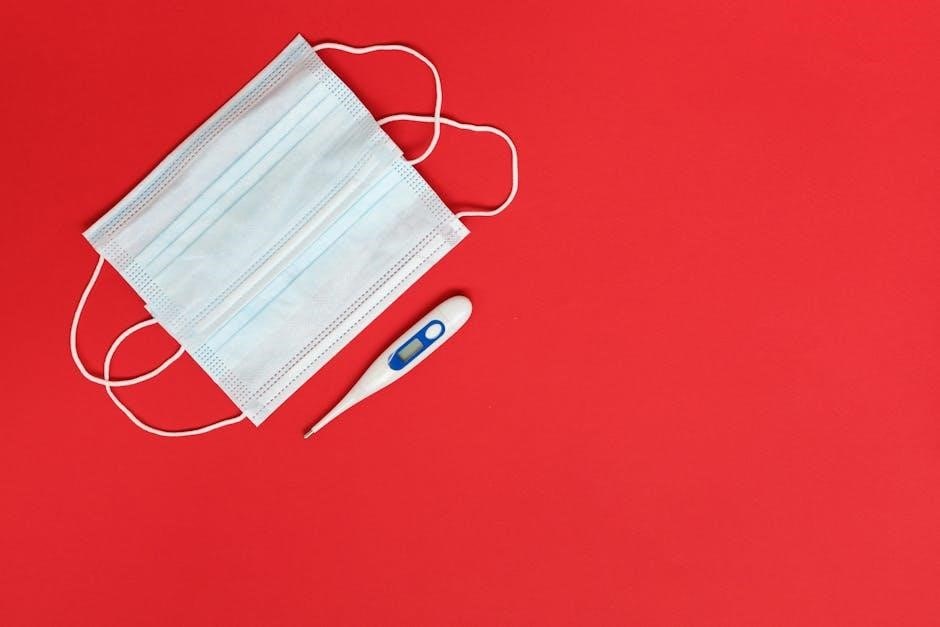
Your CVS Health Temple Digital Thermometer package includes the thermometer unit itself, a set of batteries for immediate use, and this comprehensive instruction manual. The device features an ON/OFF power button, a temperature display screen, and a protective probe for accurate temple readings.

Inspect all components upon opening; if anything is missing or damaged, contact CVS Health customer support immediately. Refer to the manual for a detailed diagram of the device;

Getting Started: Initial Setup

Begin by installing the batteries, ensuring correct polarity (+ and -). Press the power button to activate the unit and confirm it’s functioning correctly before first use.

Battery Installation: Ensuring Correct Polarity

To install batteries, locate the battery compartment, typically on the back or inside the handle of the thermometer. Insert the batteries, carefully matching the positive (+) and negative (-) ends to the markings within the compartment. Incorrect polarity can damage the device and void the warranty. Ensure the batteries are securely in place before closing the compartment. Use fresh batteries for optimal performance and accurate temperature readings. Always follow the manufacturer’s guidelines for battery type and replacement.

Powering On and Initial Self-Test

To power on the thermometer, press and release the clearly marked POWER or ON/OFF button. The unit will beep once, indicating it’s activated. Upon powering on, the device performs an internal self-test. Observe the display; all segments should illuminate briefly. This confirms the thermometer is functioning correctly. If any segments are missing or the device doesn’t beep, refer to the troubleshooting section. Ensure the thermometer is ready before taking a temperature reading.

Taking a Temperature Reading

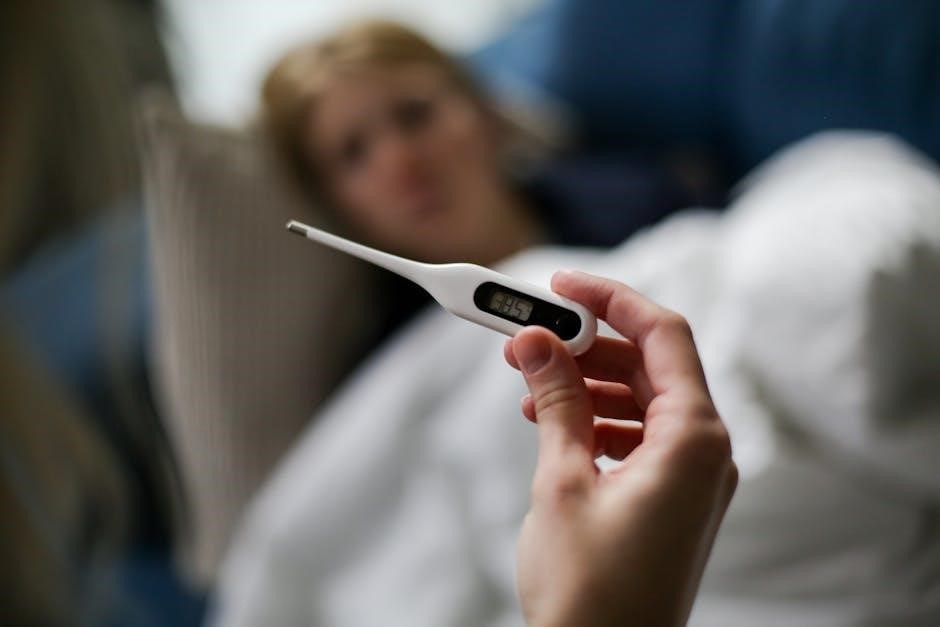
Place and hold the thermometer firmly on the temple, ensuring good skin contact. Press the power button and wait for a single beep to indicate a completed measurement.

Proper Placement on the Temple

To obtain an accurate temperature, center the thermometer probe on the temple, maintaining firm and consistent contact with the skin. Ensure the area is free from sweat or lotions, as these can interfere with readings. Gently hold the device in place; movement during measurement can lead to inaccurate results. Press the power button to initiate the scan, and keep the thermometer steady until the beep signals completion.

Audible Signal and Reading Display

The CVS Health Temple Thermometer emits a single beep to indicate a completed temperature measurement. The measured temperature will then be clearly displayed on the LCD screen. Ensure adequate lighting to easily view the reading. The display shows the temperature in either Fahrenheit or Celsius, depending on your selected setting. Observe the reading carefully and interpret it according to the guidelines provided in this manual.

Reading Temperature in Fahrenheit or Celsius

The CVS Health Temple Thermometer allows you to select your preferred temperature scale. To switch between Fahrenheit and Celsius, consult the full instruction manual for specific button combinations. Ensure the correct unit is displayed before taking a reading. Accurate interpretation relies on knowing whether the temperature is shown in °F or °C. Remember normal ranges differ between the two scales.

Interpreting Temperature Readings

Understand normal temperature ranges to assess readings accurately. A fever indicates an elevated temperature; seek medical attention if readings are consistently high or concerning.

Understanding Normal Temperature Ranges

A typical human body temperature, measured with the CVS Health Temple Digital Thermometer, generally falls between 97.6°F (36.4°C) and 99.6°F (37.6°C). However, normal temperatures can vary slightly depending on factors like activity level, time of day, and individual metabolism.

Slight variations from this range are often normal. A temperature above 100.4°F (38°C) is generally considered a fever, indicating a possible infection or illness. Consistent high readings warrant medical evaluation to determine the underlying cause and appropriate treatment.

Fever Indicators and When to Seek Medical Attention

A temperature reading of 100.4°F (38°C) or higher, consistently measured with the CVS Health Temple Digital Thermometer, indicates a fever. Monitor the fever’s duration and severity. Seek medical attention if the fever persists for more than three days, or if it exceeds 103°F (39.4°C).

Additional concerning symptoms – such as stiff neck, severe headache, difficulty breathing, or confusion – require immediate medical evaluation, regardless of the temperature reading. Trust your instincts and consult a healthcare professional if you are worried.

Care and Maintenance

Keep the thermometer clean by gently wiping the probe with a soft, damp cloth. Avoid harsh chemicals and fully dry before storing in a safe, cool place.

Cleaning the Thermometer Probe

To ensure accurate readings and hygiene, regularly clean the thermometer probe after each use. Gently wipe the probe with a soft cloth lightly dampened with water or isopropyl alcohol (70%). Avoid using harsh chemicals, abrasive cleaners, or fully immersing the device in liquid, as this could damage the internal components.

Ensure the probe is completely dry before storing the thermometer. Proper cleaning extends the lifespan of your device and helps prevent the spread of germs. Follow these steps for optimal performance and safety.

Proper Storage Guidelines

To maintain the longevity and accuracy of your CVS Health Temple Digital Thermometer, store it in a cool, dry place, away from direct sunlight and extreme temperatures. Keep the device in its original case or a protective pouch when not in use. Avoid storing it with or near sharp objects that could damage the probe.

Ensure the battery compartment is closed securely to prevent corrosion. Regular, proper storage will help ensure your thermometer remains reliable and ready for use when you need it.

Troubleshooting Common Issues

If inaccurate readings occur, check battery polarity and ensure proper temple placement. For a device that won’t power on, replace the batteries immediately.

Inaccurate Readings: Potential Causes

Several factors can contribute to inaccurate temperature readings with your CVS Health Temple Digital Thermometer. Incorrect battery installation, with reversed polarity, is a common issue. Improper placement on the temple, failing to maintain firm contact, also affects results.

External factors, like direct sunlight or extreme temperatures, can influence accuracy. Ensure the thermometer is clean and dry before each use. Movement during measurement can lead to fluctuations. Always re-test if you suspect an inaccurate reading, following all instructions carefully.

Device Not Powering On: Battery Check

If your CVS Health Temple Digital Thermometer fails to power on, the first step is a thorough battery check. Ensure batteries are correctly installed, observing the proper polarity (+ and -) as indicated within the battery compartment. Replace batteries with new ones, even if the existing ones appear to have some charge remaining.

Confirm battery contact is clean and secure. Low battery power is a frequent cause of device malfunction. If the issue persists after battery replacement, consult the troubleshooting section or contact customer support.

Error Messages and Their Meanings

While the CVS Health Temple Digital Thermometer is designed for simplicity, certain error indications may appear. If an error message displays, refer to the complete instruction manual for specific definitions. Common issues could relate to low battery power, improper temperature range, or internal device malfunction.

If an unrecognized error persists, attempt to reset the device by removing and reinserting the batteries. Contact CVS Health customer support if the error continues, providing the specific error code for assistance.

Safety Precautions

Always read the entire instruction manual before operating the device. Keep out of reach of children. Do not use if damaged, and avoid extreme temperatures.

General Safety Instructions

This thermometer is intended for intermittent use, not continuous monitoring. Never use it for any purpose other than measuring body temperature. Ensure the device is clean before and after each use to prevent cross-contamination. Do not attempt to disassemble or repair the thermometer; this could compromise its accuracy and safety. Keep batteries out of reach of children, and dispose of them properly. Avoid dropping or subjecting the thermometer to strong impacts.

Warnings and Contraindications

Do not use this thermometer orally or rectally; it is designed solely for temporal artery (temple) measurements. Avoid using the thermometer on individuals with skin conditions or injuries at the measurement site. This device is not a substitute for professional medical advice. Consult a healthcare provider if you have concerns about your temperature or health. Keep away from strong electromagnetic interference, which may affect accuracy.

Technical Specifications

Model numbers include KD-2201, KD-2202, and KD-2270. The operating temperature range is designed for standard environments, ensuring reliable measurements for diverse user needs.

Model Numbers (KD-2201, KD-2202, KD-2270)

This CVS Health Temple Digital Thermometer is available in several model variations, specifically identified as KD-2201, KD-2202, and KD-2270. While functionally similar, these models may have slight cosmetic differences. Regardless of the specific model number, all versions adhere to the same core operating principles and provide accurate temporal artery temperature readings.

Ensure the model number on your device matches the instructions provided in this guide for optimal use. These thermometers are manufactured by 180 Innovations and K-jump Health Co., Ltd., and are designed for household use.

Operating Temperature Range

The CVS Health Temple Digital Thermometer is designed to function accurately within a specified ambient temperature range. Optimal performance is achieved when used in environments between 50°F (10°C) and 104°F (40°C).

Operating outside of this range may lead to inaccurate temperature readings. Avoid using the thermometer in extremely hot or cold conditions, or in direct sunlight. Proper storage within the recommended temperature range will also help maintain the device’s accuracy and longevity.

Warranty Information

CVS Health provides a warranty for this thermometer, details of which can be found on www.cvs.com or by contacting customer support at 1-800-shop-CVS.

CVS Health Warranty Details

CVS Health stands behind the quality of its Temple Digital Thermometer. The warranty covers defects in materials and workmanship under normal household use. For specific warranty duration and coverage details, please visit the CVS website at www.cvs.com and search for product warranty information.

Proof of purchase is required for all warranty claims. The warranty does not cover damage resulting from misuse, accidents, or unauthorized repairs. Contact CVS customer support at 1-800-shop-CVS for assistance with warranty claims.

Contacting Customer Support

For questions or assistance with your CVS Health Temple Digital Thermometer, CVS customer support is readily available. You can reach them by calling 1-800-shop-CVS (1-800-746-7287). Alternatively, visit the CVS website at www.cvs.com and navigate to the “Contact Us” section for online support options.

Please have your model number (KD-2201, KD-2202, or KD-2270) ready when contacting support to expedite the assistance process. They can help with troubleshooting, warranty inquiries, and general product information.

Manufacturer Information

This thermometer is manufactured by 180 Innovations, Lakewood, CO 80215, and K-jump Health Co., Ltd. It is proudly made in China for CVS Health.

180 Innovations and K-jump Health Co., Ltd.

180 Innovations, located in Lakewood, Colorado, specializes in developing and distributing innovative health and wellness products. They collaborate with K-jump Health Co., Ltd., a Chinese manufacturing company, to bring high-quality thermometers like the CVS Health Temple Digital Thermometer to market.

K-jump Health Co., Ltd. focuses on the production and quality control of medical devices, ensuring adherence to international standards. This partnership allows CVS Health to offer reliable and affordable temperature monitoring solutions to consumers.

CVS Health Corporate Contact Details

For general inquiries or assistance regarding CVS Health products, including the Temple Digital Thermometer, you can reach them at One CVS Drive, Woonsocket, RI 02895. Alternatively, contact their customer support team via phone at 1-800-shop-CVS.

Further information and support are readily available on the CVS Health website at www.cvs.com. This includes FAQs, product manuals, and troubleshooting guides to help you effectively use your thermometer.

whalen 3 in 1 tv stand assembly instructions

The Whalen 3-in-1 TV stand provides a versatile solution for displaying your flat screen TV․ This guide will walk you through the assembly process, ensuring a successful and enjoyable setup experience․

Overview of the Whalen 3-in-1 Design

The Whalen 3-in-1 TV stand is ingeniously designed to offer three distinct display options, providing flexibility to suit various room layouts and viewing preferences․ The core of the design revolves around a sturdy base structure that can be configured to support a swivel mount, a table-top display, or accommodate wall-mounted setups․ This adaptability makes it a versatile choice for diverse entertainment needs․ Its patented design ensures that you can customize the stand according to your preference, allowing for a perfect viewing angle and optimal space utilization․ The 3-in-1 feature of this stand allows you to change the way you display your flat screen TV without requiring a completely new furniture purchase․ This unique capability is a primary feature that sets this stand apart from other traditional television stands in the market․

Pre-Assembly Preparations

Before starting, it is essential to prepare by checking all parts against the list and carefully reading the assembly instructions․ This will ensure a smooth and efficient process․

Checking Parts and Hardware List

Prior to commencing the assembly of your Whalen 3-in-1 TV stand, a crucial step involves meticulously verifying that all components are present and accounted for․ Begin by carefully unpacking all contents from the box, ensuring you have a clear and organized workspace․ Refer to the parts list provided in the instruction manual, and compare each physical part with its corresponding illustration and description․ Pay close attention to the hardware, which typically includes various sizes of bolts, screws, washers, and potentially other small pieces․ Sort the hardware by size and type to facilitate easy access during the assembly․ If any part is missing or damaged, contact Whalen Furniture immediately for assistance to avoid delays in your project․ This thorough check will ensure a smooth assembly process․

Reading the Assembly Instructions

Before you begin the physical assembly of your Whalen 3-in-1 TV stand, it is absolutely essential to thoroughly read and understand the provided assembly instructions․ Do not skip this step, as it can prevent errors, save time, and ensure a safe and proper setup․ Familiarize yourself with each step, noting the sequence in which parts are to be joined and the specific hardware required for each connection․ Pay close attention to any diagrams or illustrations, as they provide a visual guide to the process․ Take note of any special instructions or warnings that the manufacturer has included․ By taking this time to understand the instructions, you will have a much smoother and more efficient assembly․ Rushing through this part can cause mistakes and lead to disassembly, frustration, and potential damage․

Step-by-Step Assembly Process

This section provides a detailed guide on assembling your Whalen 3-in-1 TV stand․ Follow these steps carefully for a successful and sturdy final setup of the stand․

Assembling the Base Structure

Begin the assembly process by carefully unpacking all components and verifying that every part listed in the inventory is present․ This is crucial to avoid delays later․ Identify the base components, typically consisting of side panels and a bottom support․ Connect these parts using the provided hardware, usually bolts and screws․ Ensure all connections are aligned correctly before tightening any bolts․ It is important to keep the base structure level during assembly․ This will provide a stable foundation for the rest of the stand․ Double-check the stability of the base once assembled, making sure all screws are securely fastened․ This step is fundamental for the overall stability of the Whalen 3-in-1 stand, so don’t rush it․

Attaching the Upper Spine

Once the base structure is securely assembled, you can proceed with attaching the upper spine․ This is a critical step as the spine provides the necessary support for the various mounting options․ Locate the upper and lower spine components․ You’ll typically need to align the bottom section of the upper spine with the lower spine․ Use the appropriate bolts and washers, often 3/4 inch bolts, to secure the two spine sections together․ Make sure these connections are tight but not over tightened, to avoid damaging the unit․ The upper spine should be straight and properly aligned with the base․ This step will ensure the TV mount is stable and safe when the entire stand is assembled․

Mounting Options

The Whalen 3-in-1 TV stand offers versatile display options․ You can choose between a swivel mount, a table-top setup, or explore wall mount considerations, based on your needs․

Swivel Mount Setup

The swivel mount option for the Whalen 3-in-1 TV stand offers a dynamic viewing experience․ This setup allows you to easily adjust your television’s angle, providing optimal viewing from various points in the room․ The swivel mechanism typically permits a rotation of 45 degrees to the left or right, enhancing your flexibility․ During this setup, ensure all connections are secure and that the weight limitations are followed to avoid any accidents․ Properly installed, the swivel mount allows for easy adjustments and helps to customize the viewing experience for everyone in the room․ This feature is very useful in open living spaces․ The swivel mount is very effective․

Table-Top Display Setup

The table-top display configuration is a straightforward option for the Whalen 3-in-1 TV stand, ideal for those who prefer a simpler setup․ This method involves placing your television directly on the stand’s surface, using its legs or a base․ This is a common setup and is very easy to achieve․ Make sure that the TV’s base fits properly on the stand and that it is stable․ This option is best suited for televisions that have their own stand․ Ensure the unit is placed on a level surface and that the weight limit of the stand is not exceeded to avoid any tipping or damages․ It is very easy to manage․

Wall Mount Considerations

While the Whalen 3-in-1 TV stand offers a wall mount option, it’s essential to understand the implications before proceeding․ This configuration involves attaching your TV to the wall, often using the stand’s mounting hardware․ Ensure your wall is suitable for the weight of your television and the mounting hardware․ It’s crucial to use the correct screws and anchors for your wall type, be it drywall, concrete, or another material․ Always double-check that the TV is firmly mounted before releasing it․ This setup is an advanced configuration and requires a bit more expertise․ Consider consulting a professional if you are unsure about wall mounting procedures․

Post-Assembly and Usage

After assembly, focus on cable management for a tidy look․ Position your stand for optimal viewing․ Ensure stability and that all connections are secure before use․

Cable Management

Effective cable management is crucial for maintaining a clean and organized entertainment area after your Whalen 3-in-1 TV stand is assembled․ The design of this stand often includes features to help conceal and organize the numerous cables associated with your television and other media devices․ Begin by grouping similar cables together, such as power cords, HDMI cables, and audio cables․ Use cable ties, zip ties, or Velcro straps to bundle these groups․ The stand may have designated openings or channels; thread the bundled cables through these to keep them out of sight․ For cables that must extend beyond the stand, use clips or adhesive mounts to secure them along the back of the unit or furniture․ This helps to prevent a tangled mess and reduces the risk of accidental disconnection or damage․ Proper cable management not only improves the aesthetic appeal of your setup but also enhances its safety․ By keeping cables organized and out of the way, you minimize trip hazards and protect your valuable electronics․

Placement and Positioning

Once the Whalen 3-in-1 TV stand is fully assembled and cables are managed, careful consideration should be given to its placement and positioning within your room․ Select a location that provides optimal viewing angles from your primary seating area․ Ensure the stand is placed on a level surface to prevent instability․ Consider the distance between your seating and the TV screen, as this impacts viewing comfort․ A position too close or too far can cause eye strain․ Avoid placing the stand in direct sunlight, which can cause glare on the screen․ Additionally, ensure sufficient ventilation around the stand, particularly if you are storing electronic devices with heat emission․ If you opt for the swivel mount configuration, ensure the area around the stand allows for its full range of motion․ The stand should be positioned to complement the room’s layout, enhancing both functionality and aesthetic appeal․ Experiment with different locations until you achieve a balance of optimal viewing and room harmony․

Troubleshooting and Support

Should you encounter any issues during assembly or with the stand’s functionality, Whalen Furniture provides customer support․ Contact them for assistance or replacement parts․

Contacting Whalen Furniture for Assistance

If you experience any difficulties during the assembly of your Whalen 3-in-1 TV stand, or if you have questions regarding its functionality, reaching out to Whalen Furniture directly is a recommended step․ Their customer support team is equipped to assist with various issues, from clarifying assembly steps to addressing concerns about the product itself․ For direct assistance, you can contact them via phone at 1-866-942-5362․ This dedicated support line ensures you receive prompt and accurate help from the manufacturer․ Whalen Furniture’s commitment to customer satisfaction means they are prepared to help you resolve any problems efficiently, ensuring your experience with their product is smooth and enjoyable․ They are available to assist with any problems you may face․

Replacement Parts Information

Should you find yourself in need of replacement parts for your Whalen 3-in-1 TV stand, it is crucial to know the correct procedure for obtaining them․ Whalen Furniture understands that sometimes parts can be misplaced or damaged during assembly or regular use․ To address this, they provide a dedicated service for obtaining replacements․ The best course of action is to contact their customer support team directly at 1-866-942-5362․ When you call, be sure to have your model number (e․g․, XL-44, XL-44E, XL-44W, or BBXL54NV) ready, as well as the specific part number or a detailed description of the item you require․ This will allow the support team to accurately identify the part and facilitate the process of sending a replacement․ By reaching out to Whalen directly, you can ensure you receive the correct, genuine parts for your TV stand․